Wednesday, December 14, 2016

Philanthropy Project Bibliography


Number of Charities and Causes - Ellen - gave me background information about how many charities and causes Ellen supports

Amount of Money and Where in Ellen's Philanthropies- told me how much money she has put into her philanthropies and what causes she donated to

Why did Ellen give all this money? - showed me her reasons for why she gave her money

Oscar Tweet - worth three million- told me about her 3 million dollar tweet


Ellen's awards - told me she won the favorite humanitarian award and favorite daytime tv host award

Thursday, December 8, 2016

Book Cover on Industrial Age

This is a book cover about the industrial age of in the United States. Main factors contributing to the United States success during this time was the advancement in the use of steel and oil,  and also the forming of the assembly line. These factors were a major contribute to the technological and industrial advancement of the US because of their involvement with the making of railroads, automobiles, and airplanes. All of this progress was made by some very important figures in American history including: Henry Ford, Bessemer and Kelly, Andrew Carnagie, Rockefeller, and also the many workforces during this time. This era and the factors included are very significant to the United States because this was a time where industry was at its peak, and we began a major progression.

Wednesday, November 30, 2016

Exploring Business Industry

Today in class we watched a documentary about cocoa production in the Ivory Coast. We learned about the many terrible conditions involved with it as well as the child labor that is a part of it. We saw leaders of Nestle companies talking about their goals and issues with the cocoa production and the profit that follows as well. To follow up on some research about the business industry I looked at a website about Nike's sustainable innovation (http://about.nike.com/pages/sustainable-innovation). The website stated three goals of Nike's work which included: minimizing environmental footprint, transforming manufacturing, and unleashing human potentials. This made me wonder about the specific goals that all other companies that affect my daily life have. Today also made me want to know if the cocoa farmer's pay will ever be increased, and if Nestle will create a better environment for them with the money they make?

Monday, November 21, 2016

Define Supply Chain Management

Supply Chain Management (SCM) is the oversight of materials, information, and finances as they move in a process from supplier to manufacturer to wholesaler to retailer to consumer. 

Friday, November 18, 2016

Smoke Signals

       In the film Smoke Signals, two Native Americans go on a journey together, and along the way we learn about the many burdens as well as the benefits that come with living as an Indian man. Victor and Thomas both have grown up on an Indian reservation, and have come to understand Indian life completely. While Victor represents a common stereotype of a stoic Indian facing violence and hardships, Thomas represents a kind Indian who is very involved in Indian tradition. Indians seem to have had it rough in our country's history, and that history effects how they are today and also how they are looked upon by society. Although there are many struggles due to the history and stereotypes, there are also some very meaningful and powerful aspects of Native American life that are represented in this movie.
       In both Victor and Thomas' early lives they experience and struggle with circumstances and ideas having to do specifically with Native American history and stereotypes. For example, Indians are thought of as fierce warriors that are prone to violence. This need for violence has come from the Indians feeling a need to fight for their lives due to the American's many attacks on them. In Victor's early life he experiences and is majorly affected by violence coming from his father. His parents also represent another common issue among Indians, alcoholism. In a few scenes there are flashbacks to when Victor is a child and he is watching his parents as they get more and more drunk and make fools of themselves. He represents his hatred for their drunkenness by throwing bottles of alcohol and breaking them the next morning. In Indian culture parents have a great impact on their children so this is very affective to his life. He is also aware that he has a family history of alcoholism, therefore he does not drink ever. All of these terrible occurrences are happening on an Indian reservations, where history has shown that there is extreme poverty there. We are shown examples of the Indian's suffering from extreme poverty when the truck will barely start, Victor doesn't have enough money to go to Arizona, and that the women's car can only drive in reverse. Poverty, alcoholism, and violence are all things that have become a part of a Native American lifestyle due to their history of being attacked multiple times and forced to live on reservations. Many ideas that branch off of these aspects and other history have created stereotypes of Indians. Common stereotypes of Indians include that all they do is tell war stories, they are very poor, and since they are a different race than whites they are not like us. On Thomas and Victor's journey they experience hostility due to people believing in these stereotypes. When they are traveling on the bus, they get many weird stares from the people sitting down because they look different, and then later on they are disrespected by two men on the bus. Two men take their seats and Victor asks them to move and one of the men replies, "Find somewhere else to have a powwow." This is mocking their culture and shows that whites feel superior to them due to their many victories in historic battles against them,so they can say mean things. Living as a Native American comes with many challenges due to peoples' assumptions based off of history and stereotypes.
       In contrast to all of the terrible aspects of Indian life, there are some things that bring power and meaning to living as a Native American. In Native Americans' lives, culture, tradition, and family are the most important thing to them. In the movie we hear stories from both Thomas and a woman they meet along the way named Suzie. Telling stories is a very popular tradition among Native Americans and is very sacred to their culture. In the movie we are shown that often times Indian stories are embellished in order to create community, express magical ideas, and provide entertainment. Stories like this are very meaningful to those who tell them and hear them in the community. They provide a very strong sense of power to the Indian's and help them create meaning to their traditions as well as highlight the importance of all of the great things Indian's have accomplished in the past. Another very important detail about Indian life that is shown through the movie is how often the Indians join together as a group, both Suzie and Thomas tell stories from these type of events. Indians often have powwows or feasts in order to bring their community together. This sense of a strong community brings so much power and joy to the Indian tribes. It is very obvious that family and community are very important virtues to Indian culture. We see the importance of family and the influence that family has on each other through the interaction of Thomas and his grandmother at the end. They act alike, look alike, and could not be happier to see each other. This represents the Indian's closeness in community, and so does the fact that Thomas offered Victor money in order to help him on his journey. The importance of family adds a lot of meaning to their lives and helps them get through their hardships.  From telling stories to helping friends and family, we see that there is much power and meaning in Native American history and culture.
       This movie does a great job of showing both the positive and negative side of life as an Indian. It shows both the relationships between whites and Native Americans as well as Native American's relationships with each other due to conflicts in the past. Thomas and Victor come face to face with many problems in their lives and also on their journey due to these historic conflicts, but in the end they are successful with their goal and find forgiveness and acceptance. This shows that although Indian's have had it rough in the past and are still discouraged for it, they have found power and meaning in their lives. 


Tuesday, November 15, 2016

Project 562

Project 562 is a photographic documentary about the lives of Native Americans created by Matika Wilbur. In this project her goal is to take photos and gather stories from each federally recognized Indian tribe in the U.S. With these images and narratives she is aiming to educate the nation about Native Americans, get rid of stereotypical ideas about them, and express their voice in the community. Matika says, "Conversations about tribal sovereignty, self determination, wellness, recovery from historical trauma, and revitalization of culture will accompany the photos in captions, video, and audio recordings." In all of this information and pictures she is presenting in this moving project about Native Americans in the United States she hopes to bring cultures together, get rid of racism, and honor those who helped create this country.
.

Monday, October 31, 2016

Life in the West

Today in class we read newspapers from the timespan of 1866-1880 from places out West. I found a newspaper(I lost track of the name and place) about a murder trial that was going on, and the community seemed to be very against the suspect. They wanted him to be found guilty but they had very little evidence to put him away. This taught me that the West did not have a very strong judicial system because they had trouble convicting this man although the entire town believed he was guilty. I also read the Arizona Citizen, and this talked about the Apaches. The newspaper listed many crimes and wrongdoings of the Indians, so I concluded that people from Arizona saw the Apaches as murderers and very bad people. Another thing I found out about the West was that railroad accidents were very common and seemed almost unavoidable. The Helena Weekly Herald proved this by mentioning very many stories and statistics about railroad problems out West. All of this information about the West that I found in the Newspaper Archive showed me that they were still in the process of developing during this time frame because every newspaper seemed to be talking about a conflict going on.

These are two images of railroad accidents in the West in the 1870s.

This is a picture of the fierce Apache Indians.

Wednesday, October 12, 2016

Human Trafficking Summary

In history we learned that slavery is still very present in society today. It occurs in many different forms nowadays. An example we discussed was forced marriage, which is when someone is married without one of the spouse's consent due to different circumstances such as money or religion. Also human trafficking is a very serious topic and is relevant in many countries around the world. Different types of this terrible phenomenon include organ trafficking and sex trafficking. This subject is very important for people of our generation to learn about because it is still occurring today all around us.

Friday, September 30, 2016

Forced Marriage

Different Types of forced marriage:
"Forced marriage can assume various forms and may occur in situations involving slavery; mail order marriages; human trafficking; arranged, traditional and customary marriages; expedient marriage; marriages as dispute settlement; fictitious marriages; trokosi (the practice of giving young virgin girls to priests to serve as sexual slaves as payment for services or as atonement), and; bride kidnapping or marriage to acquire citizenship. Also, the forced marriage of people with disabilities, where the victim may lack capacity to give full and informed consent, or she may lack capacity to consent to sex within a marriage, constitutes another form." http://www.endvawnow.org/en/articles/614-definition-of-forced-and-child-marriage.html


Forced Child Marriages:
It is mostly women affected by forced marriage. If you're married under the age of 18 its automatically considered a forced marriage. Being in a forced marriage as a child can affect the "children’s education and risks to their physical and psychological health." Child marriage can be considered slavery if: "1. If the child has not genuinely given their free and informed consent to enter the marriage; 2. If the child is subjected to control and a sense of “ownership” in the marriage itself, particularly through abuse and threats, and is exploited by being forced to undertake domestic chores within the marital home or labour outside it, and/or engage in non-consensual sexual relations; 3. If the child cannot realistically leave or end the marriage, leading potentially to a lifetime of slavery."http://www.antislavery.org/english/slavery_today/descent_based_slavery_2/default.aspx

In the United States: 
"An arranged marriage is differentiated from forced marriage because the marrying parties agree to the marriage arrangement in an arranged marriage."
  - In the United States considers forced marriage a violation of human rights and in some cases child abuse. 
 - In the US, "...only ten states have legislation that directly address forced marriage. The U.S. State Department recognizes forced marriage as a marriage without the consent of at least one party"
 -  "Exceptions allow children under the age of 18 to legally marry. Most states grant children, usually between 16 to 17 years old, a marriage license so long as their parents give parental consent. The other exception involves judicial approval and can allow people under the age of 15 to marry.Unchained at Last found that between 1995 and 2012, judges allowed 178 children between the ages of 10 and 15 to marry in New Jersey. From this sample, a number were children married to adults.The Tahirih Justice Center reported at least 3,000 suspected forced marriage cases in the United States between 2009 and 2011."
http://www.endslaverynow.org/learn/slavery-today/forced-marriage

Why are people forced into marriage:
  • "To control unwanted behaviour and sexuality, and prevent ‘unsuitable’ relationships, i.e. with people outside their ethnic, cultural, caste or religious group
  • To protect perceived cultural or religious ideals
  • Family ‘honour’ or long-standing family commitments
  • Peer group or family pressure
  • To ensure land, property and wealth remain in the family
  • To strengthen family links
  • To assist claims for residence and citizenship
  • To provide a carer for a disabled family member / reduce the ‘stigma’ of disability" http://www.bbc.co.uk/ethics/forcedmarriage/motives_1.shtml 


Tuesday, September 27, 2016

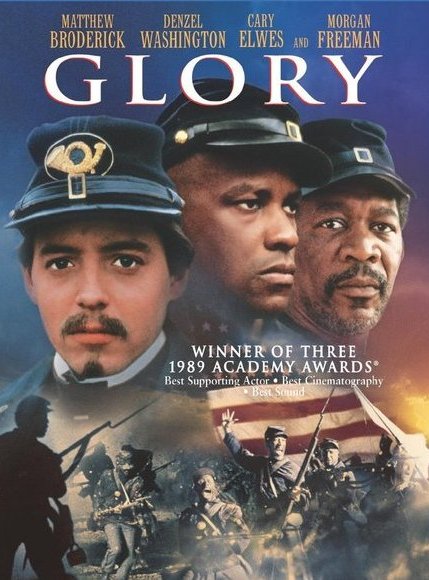
Watching historical movies in history class is very beneficial to learning. A movie makes ideas easier to understand and creates a meaningful and relatable connection to the events. Reading information or getting lectured is not very engaging to a student, while watching a movie makes a student eager to learn. Historical movies such as Glory and 12 Years a Slave do a great job of allowing the watcher to explore real events as well as understand circumstances and attitudes of the people during that time. Both of these movies focus on very important parts of pre-Civil War US history, and you can learn a lot about this time by simply watching these movies and doing a little bit of research. These films were both very successful and proven to be mostly historically accurate.

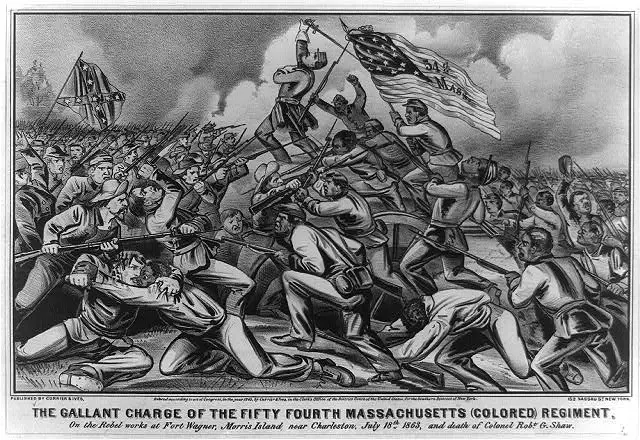
 The movie Glory is about one of the very first African American regiments. They were called the 54th Massachusetts Infantry, and were led by a white man named Robert Gould Shaw. According to Reelviews review of Glory, it was “…one of the best movies ever made about the American Civil War,” and it was, “…mostly historically accurate… a great deal of effort went into getting the details correct.” In my research I found very few inaccuracies within this film, and a small one that was pointed out to me in an article on cwmemory.com was that the regiment “is presented primarily as a unit of fugitive slaves… but it was mostly made up of free blacks from Massachusetts.” This false detail was portrayed in the movie to emphasize the message of the story that they all had something to fight for. By presenting the regiment as a unit of fugitive slaves, it increases our view of the intensity of their desires to defeat slavery since they have been through it themselves. Although it is not true it highlights a major idea of the Civil War that the slaves were willing to do anything for their freedom. Other than this the film presents very important and factual events that the regiment was involved in. The major events of this movie include the boycott of the wages, the burning of Darien Georgia, and the attack on Fort Wagner. These were all shown accurately within this film. Glory does a great job of depicting the events that the regiment went through, and along the way you grow attached to the characters and end up wanting to know more about them. Watching intense historical movies like this one makes learning about historical events very easy and encourages further research.
Another very famous movie about this time is 12 Years a Slave. This movie was originally a book written by Solomon Northup. He was a free man that got kidnapped and traded illegally as a slave. On the Huffington Post I found a quote from the director, Steve McQueen that said, “If I was to illustrate the book – it would be for more worse than what I filmed. If you count the incidences of violence you can see- it’s not that many scenes…but it feels like so much more. I’m very proud of it because I can’t back off things like that. It’s about slavery.” This shows that while making the movie his main purpose was to truly inform the people of what Northup went through as well as emphasize the many terrible aspects of slavery. In this movie there were also very few inaccuracies, and they were only added to create a stronger story. In my research I found that the only scene in the movie that was not in the book was when a slave got murdered on the ship when he tried to stop a sailor from raping an enslaved woman. Although this did not happen, it was included to show that things like this did happen to slaves and emphasize how terrible their lives were and that the white people got away with treated them like that. The movie does a great job of accurately showing the life of Solomon Northup as well as bringing up major incidence that were common within slave life.  Illegal trade was very common during his time and the movie shows how it was done, and that those who were guilty of it got away with it. The movie also shows a relationship of a slave that sleeps with her owner and the owner’s wife. The movie shows the wife being very abusive towards her to show that sexual abuse of slaves and tension with the wives and the slave women was very common. While showing true events from Solomon Northup’s life, the movie also emphasized the dramatic and terrible events that happened to all slaves.
Watching these two movies was very helpful to my learning because they did a great job of accurately displaying US History. They were also both very successful. According to IMBD, Glory was rated 7.9/ 10 stars and had a gross of $26,830,000, and 12 Years a Slave was rated 8.1/10 stars and had a gross of $56,667,870. These movies were obviously enjoyed, and they also provided accurate information, so this is a great way to learn. Both movies were filled with historic accuracy but added some minor inaccuracies in order to make their movies more dramatic and add emphasis on their themes. Historic movies are a great way to introduce topics to students because they are both enjoyable and educational.

Reelviews - review of glory – This review provided information on how critics saw the movie’s accuracy.
CWMemory - History in Glory – This article provided an example of a small inaccuracy within the movie Glory.
Huffington Post - words from director of 12 years a slave – This article provided words from the director of the movie 12 Years a Slave.
IMDB - rating/money of 12 years a slave – This provided information on the rating and gross of the movie 12 Years a Slave.
IMDB - rating/money of glory – This provided information on the rating and gross of the movie Glory.
civilwar.org - bio of shaw – This provided information on Shaw that allowed me to compare how he was shown in the movie to real information about him.

 bio of solomon and Harvard Press - Solomon Northup - Both provided information on Solomon that allowed me to compare how he was shown in the movie to real information about him, and his intentions for writing the book.
The Atlantic - 12 years a slave movie vs book - This source provided me with information on how accurately the movie was made from the book. It helped me get a little information on what was changed, added or kept out.
c civil war academy - civil war black soldiers  - This gave me background information about life and conditions as a black soldier.
Darien Burning - This showed me that the Darien Burning was correctly depicted by the movie due to the description and date from this source.
sexual exploitation of enslaved women  - This provided me with information about the sexual abuse of slave women, and how common it was. It also showed that abuse from the Master's wife was common towards enslaved women involved with their husbands.