Friday, September 30, 2016

Forced Marriage

Different Types of forced marriage:
"Forced marriage can assume various forms and may occur in situations involving slavery; mail order marriages; human trafficking; arranged, traditional and customary marriages; expedient marriage; marriages as dispute settlement; fictitious marriages; trokosi (the practice of giving young virgin girls to priests to serve as sexual slaves as payment for services or as atonement), and; bride kidnapping or marriage to acquire citizenship. Also, the forced marriage of people with disabilities, where the victim may lack capacity to give full and informed consent, or she may lack capacity to consent to sex within a marriage, constitutes another form." http://www.endvawnow.org/en/articles/614-definition-of-forced-and-child-marriage.html


Forced Child Marriages:
It is mostly women affected by forced marriage. If you're married under the age of 18 its automatically considered a forced marriage. Being in a forced marriage as a child can affect the "children’s education and risks to their physical and psychological health." Child marriage can be considered slavery if: "1. If the child has not genuinely given their free and informed consent to enter the marriage; 2. If the child is subjected to control and a sense of “ownership” in the marriage itself, particularly through abuse and threats, and is exploited by being forced to undertake domestic chores within the marital home or labour outside it, and/or engage in non-consensual sexual relations; 3. If the child cannot realistically leave or end the marriage, leading potentially to a lifetime of slavery."http://www.antislavery.org/english/slavery_today/descent_based_slavery_2/default.aspx

In the United States: 
"An arranged marriage is differentiated from forced marriage because the marrying parties agree to the marriage arrangement in an arranged marriage."
  - In the United States considers forced marriage a violation of human rights and in some cases child abuse. 
 - In the US, "...only ten states have legislation that directly address forced marriage. The U.S. State Department recognizes forced marriage as a marriage without the consent of at least one party"
 -  "Exceptions allow children under the age of 18 to legally marry. Most states grant children, usually between 16 to 17 years old, a marriage license so long as their parents give parental consent. The other exception involves judicial approval and can allow people under the age of 15 to marry.Unchained at Last found that between 1995 and 2012, judges allowed 178 children between the ages of 10 and 15 to marry in New Jersey. From this sample, a number were children married to adults.The Tahirih Justice Center reported at least 3,000 suspected forced marriage cases in the United States between 2009 and 2011."
http://www.endslaverynow.org/learn/slavery-today/forced-marriage

Why are people forced into marriage:
  • "To control unwanted behaviour and sexuality, and prevent ‘unsuitable’ relationships, i.e. with people outside their ethnic, cultural, caste or religious group
  • To protect perceived cultural or religious ideals
  • Family ‘honour’ or long-standing family commitments
  • Peer group or family pressure
  • To ensure land, property and wealth remain in the family
  • To strengthen family links
  • To assist claims for residence and citizenship
  • To provide a carer for a disabled family member / reduce the ‘stigma’ of disability" http://www.bbc.co.uk/ethics/forcedmarriage/motives_1.shtml 


Tuesday, September 27, 2016

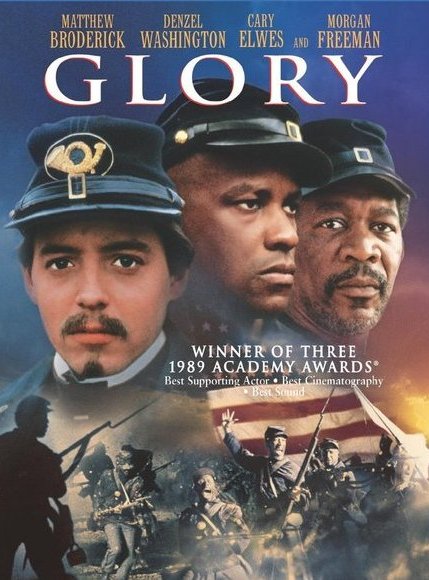
Watching historical movies in history class is very beneficial to learning. A movie makes ideas easier to understand and creates a meaningful and relatable connection to the events. Reading information or getting lectured is not very engaging to a student, while watching a movie makes a student eager to learn. Historical movies such as Glory and 12 Years a Slave do a great job of allowing the watcher to explore real events as well as understand circumstances and attitudes of the people during that time. Both of these movies focus on very important parts of pre-Civil War US history, and you can learn a lot about this time by simply watching these movies and doing a little bit of research. These films were both very successful and proven to be mostly historically accurate.

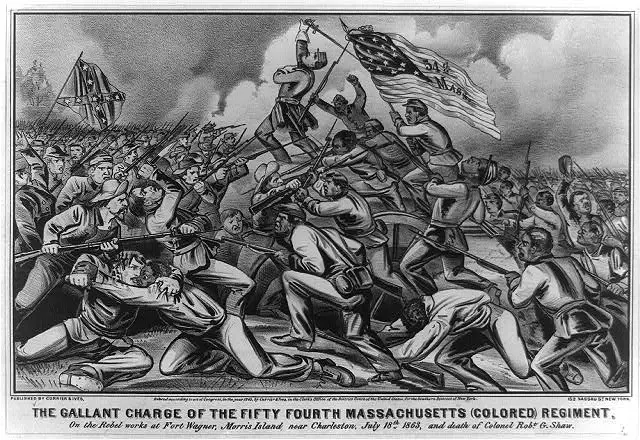
 The movie Glory is about one of the very first African American regiments. They were called the 54th Massachusetts Infantry, and were led by a white man named Robert Gould Shaw. According to Reelviews review of Glory, it was “…one of the best movies ever made about the American Civil War,” and it was, “…mostly historically accurate… a great deal of effort went into getting the details correct.” In my research I found very few inaccuracies within this film, and a small one that was pointed out to me in an article on cwmemory.com was that the regiment “is presented primarily as a unit of fugitive slaves… but it was mostly made up of free blacks from Massachusetts.” This false detail was portrayed in the movie to emphasize the message of the story that they all had something to fight for. By presenting the regiment as a unit of fugitive slaves, it increases our view of the intensity of their desires to defeat slavery since they have been through it themselves. Although it is not true it highlights a major idea of the Civil War that the slaves were willing to do anything for their freedom. Other than this the film presents very important and factual events that the regiment was involved in. The major events of this movie include the boycott of the wages, the burning of Darien Georgia, and the attack on Fort Wagner. These were all shown accurately within this film. Glory does a great job of depicting the events that the regiment went through, and along the way you grow attached to the characters and end up wanting to know more about them. Watching intense historical movies like this one makes learning about historical events very easy and encourages further research.
Another very famous movie about this time is 12 Years a Slave. This movie was originally a book written by Solomon Northup. He was a free man that got kidnapped and traded illegally as a slave. On the Huffington Post I found a quote from the director, Steve McQueen that said, “If I was to illustrate the book – it would be for more worse than what I filmed. If you count the incidences of violence you can see- it’s not that many scenes…but it feels like so much more. I’m very proud of it because I can’t back off things like that. It’s about slavery.” This shows that while making the movie his main purpose was to truly inform the people of what Northup went through as well as emphasize the many terrible aspects of slavery. In this movie there were also very few inaccuracies, and they were only added to create a stronger story. In my research I found that the only scene in the movie that was not in the book was when a slave got murdered on the ship when he tried to stop a sailor from raping an enslaved woman. Although this did not happen, it was included to show that things like this did happen to slaves and emphasize how terrible their lives were and that the white people got away with treated them like that. The movie does a great job of accurately showing the life of Solomon Northup as well as bringing up major incidence that were common within slave life.  Illegal trade was very common during his time and the movie shows how it was done, and that those who were guilty of it got away with it. The movie also shows a relationship of a slave that sleeps with her owner and the owner’s wife. The movie shows the wife being very abusive towards her to show that sexual abuse of slaves and tension with the wives and the slave women was very common. While showing true events from Solomon Northup’s life, the movie also emphasized the dramatic and terrible events that happened to all slaves.
Watching these two movies was very helpful to my learning because they did a great job of accurately displaying US History. They were also both very successful. According to IMBD, Glory was rated 7.9/ 10 stars and had a gross of $26,830,000, and 12 Years a Slave was rated 8.1/10 stars and had a gross of $56,667,870. These movies were obviously enjoyed, and they also provided accurate information, so this is a great way to learn. Both movies were filled with historic accuracy but added some minor inaccuracies in order to make their movies more dramatic and add emphasis on their themes. Historic movies are a great way to introduce topics to students because they are both enjoyable and educational.

Reelviews - review of glory – This review provided information on how critics saw the movie’s accuracy.
CWMemory - History in Glory – This article provided an example of a small inaccuracy within the movie Glory.
Huffington Post - words from director of 12 years a slave – This article provided words from the director of the movie 12 Years a Slave.
IMDB - rating/money of 12 years a slave – This provided information on the rating and gross of the movie 12 Years a Slave.
IMDB - rating/money of glory – This provided information on the rating and gross of the movie Glory.
civilwar.org - bio of shaw – This provided information on Shaw that allowed me to compare how he was shown in the movie to real information about him.

 bio of solomon and Harvard Press - Solomon Northup - Both provided information on Solomon that allowed me to compare how he was shown in the movie to real information about him, and his intentions for writing the book.
The Atlantic - 12 years a slave movie vs book - This source provided me with information on how accurately the movie was made from the book. It helped me get a little information on what was changed, added or kept out.
c civil war academy - civil war black soldiers  - This gave me background information about life and conditions as a black soldier.
Darien Burning - This showed me that the Darien Burning was correctly depicted by the movie due to the description and date from this source.
sexual exploitation of enslaved women  - This provided me with information about the sexual abuse of slave women, and how common it was. It also showed that abuse from the Master's wife was common towards enslaved women involved with their husbands.